“It’s only tokenism if you stop”: How wider perspectives lead to inclusive narratives and engaged audiences
Published: 07 Jul 2025
Author:
Richard Reeves
Publishers are nothing without their audiences, and audiences become nothing without growth. Yet publishers often fall in the trap of serving the same people with the same content until it all runs dry. A lack of internal diversity trickles down into a lack of diverse output, resulting in missed opportunities to serve a wider audience and enrich the experience of existing audiences with fresh perspectives.
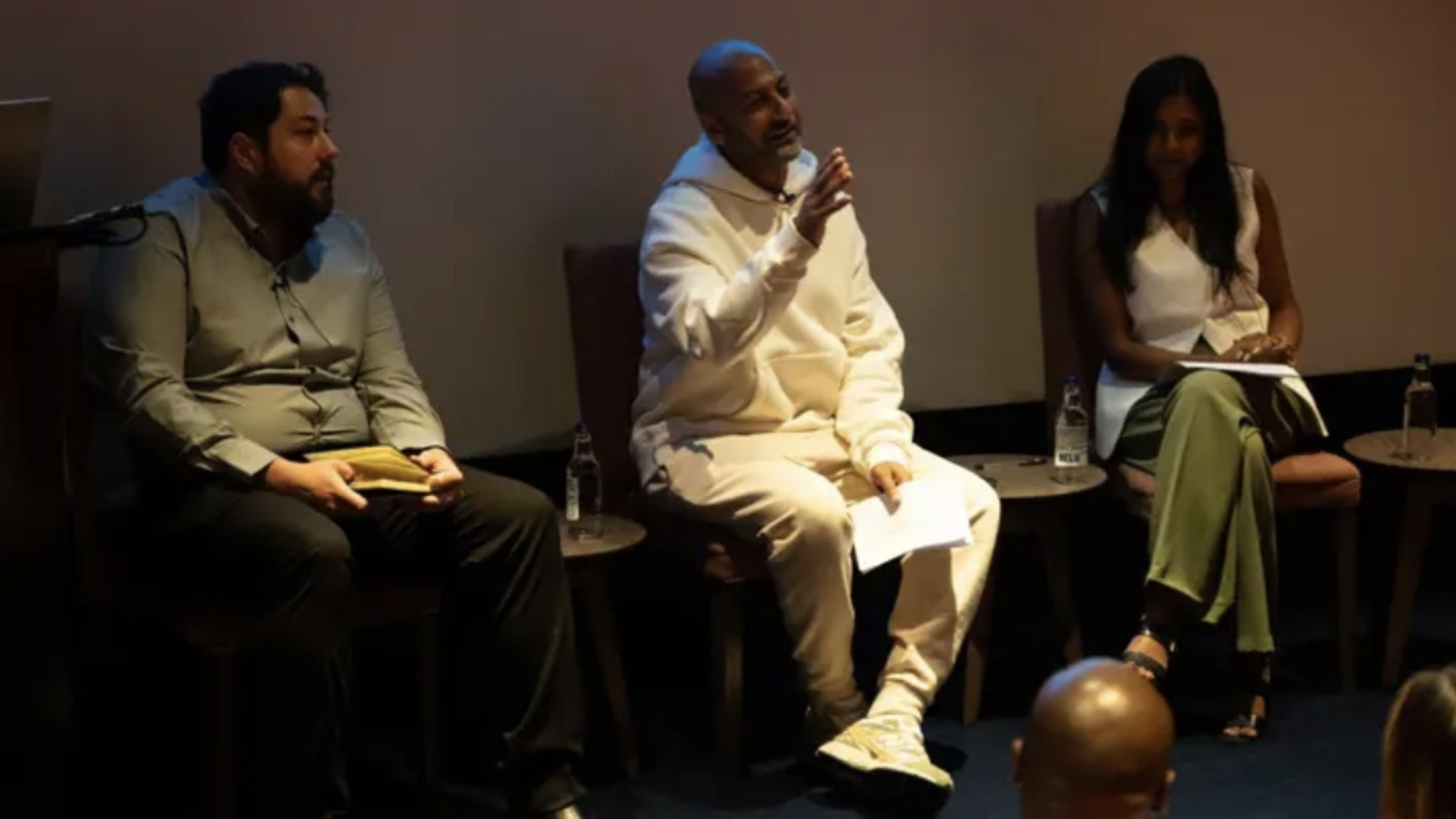
What if, instead, publishers created a self-perpetuating cycle of inclusivity that encompassed everything from hiring through to editorial and commercial strategy? That was the question for our most recent AOP CRUNCH event, where we were joined by experts from across the media world who are breaking taboos and building networks to push the industry closer to this ideal.
A huge thank you to the day’s hosts and panel moderators, Elaine dela Cruz and Gary Rayneau of Project 23, and Toby Granville of Newsquest.
Unlocking untold stories from the global majority
The Conscious Advertising Network (CAN) connects 200 organisations with the aim of redrawing advertising along ethical, transparent, and inclusive lines. CAN’s primary work involves education through case studies, toolkits, and knowledge sharing, and it collaborated with the UN on the development of the United Nations Global Principles for Information Integrity.
In the spirit of CAN’s educational mission, Membership & Engagement Account Director Nafissa Norris shared its guiding principles, a framework through which media organisations can contribute to a more ethical advertising ecosystem. These principles — available on CAN’s website — begin with how organisations recruit and cultivate inclusivity internally; through to their creative and media choices; on to the multitude of supply chain factors; and finally encourages open questioning of platforms and partners.
Nafissa stressed that information integrity and inclusivity make sound business sense. In short, quality media drives better results. But, for Nafissa, the professional is also personal, and due to the realities of intersectionality — how overlapping social identities affect experiences of discrimination and privilege — true inclusivity is incompatible with a simple box-ticking approach.
“Most of my life, [people have assumed] that I am Indian or Asian, when, in fact, I'm not. I'm African, more specifically, Mauritian,” said Nafissa. “But I don't identify as Black, so I've always had to tick other/please specify. I don't know where my data points land and when my voice is heard. … I don't expect anyone in that global majority box to look like me or have the same cultural, lived experiences.
“There are so many untold stories and untargeted communities within the global majority. There's value in a sense of belonging, authenticity, and using positive emotions to drive attention.”
Trying and failing is far better than not trying at all
Impress is a nonprofit media regulator which promotes ethical standards of journalism. Lexie Kirkconnell-Kawana, CEO at Impress, is often called in when things go wrong, such as when a publisher is accused of racism or homophobia. Rather than be reactive, it’s much better for publishers to get ahead of the problem with structures that discourage discrimination and ease remediation.
First, publishers should decide on an inclusivity policy and make it publicly transparent so that everyone — from employees to suppliers and readers — knows where you stand and what standards you are held accountable for.
Second, develop a strategy for community engagement and a process to enact your inclusivity policy. Build spaces to discuss issues of inclusivity within your organisation, and do not presume the definition of discrimination is universal.
To inform its anti-discrimination clause within its standards, Impress canvassed thousands of people within frontline organisations and representative groups to establish how discrimination and misrepresentation undermine trust, and the inverse too. This outreach followed a method called co-creational, the essence of which is, “We are not the experts in how communities are affected by news, those communities are.”
The one thing publishers can’t afford to do is nothing at all.
“My plea to you all as change makers in your organisations is that that fear of trying and failing should not outweigh the risk of not trying at all,” said Lexie. “… There is such an opportunity cost now of not engaging with diverse audiences. Not serving new audiences is going to be a new kind of failure in the changing ecosystem. With the right mitigations in place, the right guardrails, you should be able to approach [inclusivity] with a lot of creativity and confidence.”
How Black Beauty Hub secured its buy-in, and its name
The inciting incident that led Lydia Amoah to found research and insights agency Backlight was as simple as her trying to buy makeup as a Black woman, only to be told that the store only stocked items for “normal” skin tones. Since then, Lydia has dedicated herself to proving the spending power and commercial opportunities of global majority audiences who, as she knew too well, are often excluded from the market.
Lydia’s work culminated in the Black Pound Report, an exhaustive study of the untapped potential of the UK’s multi-ethnic consumers, a prescient highlight being that Black, Asian and Multi-Ethnic consumers spend £230 million a month on health and beauty, more so than any other audience.
It was insights such as these that Natasha Banjo, Portfolio Director at Hearst UK, used to secure commercial buy-in for Cosmopolitan’s Black Beauty Hub. As the name suggests, Natasha’s pitch was a beauty vertical created for Black women, by Black women. In addition to proving the business case for the initiative and aligning it with Hearst’s ongoing digital transformation efforts, there was a three-week approval process over whether the word “Black” should be featured so prominently.
“That shows the fear element. For the record, you can say the word Black, you can say the word brown, you can say the word white, you can say the word gay,” said Lydia. “Because, if you're describing a person, that's fine, if you've done the work internally. If you've got internal [inclusion] policies, you've got your ERG groups, you've got people communicating how they want to be spoken about. The narratives, the language, are absolutely key. That's why that conversation took three weeks to pass.”
The Black Beauty Hub has gone on to prove Lydia and Natasha right: the Black audience is underserved, and they show up when authentically represented. The hub has secured commercial sponsorships and creative partnerships from the likes of Dyson and Garnier and has delivered an incredible 200x return on investment. But none of this would matter for Natasha if it wasn’t delivering exactly the sort of beauty content she wishes she had growing up:
“We're talking to our audience — we hit one in five millennials, one in four Gen Z — and they're saying that they have digital fatigue, and that they are lonely. They need a safe space where they can talk about coming-of-age things. That's what we're trying to do with the Black Beauty Hub: a safe space where you can talk about the things that matter; where you get recommendations, where the team try things unapologetically on screen without makeup on in real time … It’s relatable, tangible content.”
Inclusivity begins at the bottom of the career ladder
Grant Logan set up Disability Today to push news to the wider disabled community, but in the process realised that the network of volunteer, amateur reporters who kept it running could be turned into a pathway to employment within journalism. Grant talked to the NTCJ and The Academy for Disabled Journalists was formed, which has since educated 100 students with various disabilities. Alumni include Matt Bassett of BBC Wales and Jamie Green of ITV News.
Another alumnus is Emily Davison of Newsquest Media Group, who was joined on stage by Rosie, her guide dog. Emily had a master’s degree and a bursting freelance portfolio which included BBC, Channel 4, and Cosmopolitan, yet no one wanted to hire her full time. Emily attributed this to taboos around discussing disabilities and the accommodations they might require.
Emily pursued a journalism qualification to strengthen her pitch, though she emphasised that, as always, who you know is just as important as what you can do, which can be doubly true if your career depends on people being able to have potentially awkward conversations:
“Don't be a statistic. Don't be a number. Be a person, be a game player. Show who you are, show what you can do. Don't be afraid to talk to people … especially when you tick that box as a disabled person. People might have questions, but they might not feel they can ask those questions. If they've met you, spoken to you, had that tangible connection with you — and they know what you can do and what your limits are, what things you can do and what things you might need adjustments with — they'll be better placed to know that you're right for the job.”
Emily was joined by Newsquest colleague and award-winning Apprentice News Reporter Ezekiel Bertrand, who joined the publisher through its Young Reporter Scheme, which provides students in years 10 through 13 the opportunity to write published articles. Just 18, Ezekiel has already been awarded his NCTJ diploma, with no student debt and ample first-hand experience in news gathering and writing. The typical education track did not appeal to Ezekiel, who dealt with racism regularly at school.
For publishers who want to provide similar opportunities to fledgeling journalists, Ezekial recommends a no-nonsense approach: “No sugarcoating … Make people who are 16–17 do the same thing that a 24-year-old would do, just go straight into it. I think that's the main thing: to not, because someone’s younger, shield them from what the real world is like. In journalism, there is an emotional toll with the darker stories, the deaths that come with it, speaking to family members.”
The Academy for Disabled Journalists is in urgent need of support. Its five-year funding from the National Lottery has come to a close, and it has had to pause some programmes. Please click here to donate and spread the word.
“If somebody uses a product, they can advertise a product”
A fundament of representation is who does and does not get to be seen. Despite 16% of the global population living with a disability, this reality has been almost invisible in advertising. Inclusive agency ZBD, founded by Laura Winson, was established to secure opportunities for models with visible differences, from disability to appearance and gender identity.
Laura’s work has broken the vicious cycle of advertisers not hiring diverse models because few agencies represent them, and few agencies representing diverse models because advertisers don’t request them. The approach at ZBD is to apply for any brief that fits the bill, even if it doesn’t specify the model’s particular characteristics, because their differences have no bearing on their ability to follow direction and showcase a product.
ZBD has secured major campaigns for Gucci, Vogue, and Adidas, and represents the breakout star model Ellie Goldstein, who has Down Syndrome. However, the response to a pitch is often silence. Of course, no one is going to say, “I am discriminating,” but this leaves Laura guessing as to why a pitch was unsuccessful. The silence around disability and visible differences is not always mean-spirited, rather, Laura believes, it stems from fear:
“Often, we see that people use tokenism as a reason to not [cast people with disabilities]. And that's frustrating to us, because then it excludes a whole section of society from fear of being called out as tokenistic. You have to take those first baby steps to be inclusive. If somebody uses a product, they can advertise that product. Disability is just part of who they are.”
Fear of backlash not only harms representation, it’s a missed opportunity. Laura noted that inclusive campaigns see 3.5% higher short-term sales, 16% higher long-term sales, and a 15% increase in customer loyalty. For every angry “go woke, go broke” email, there are far, far more people who actively support a commitment to inclusion.
How to get inclusivity right, and how easy it is to get it wrong
Ridhi Radia, Head of ED&I at Immediate Media, leads the group’s Faces & Voices initiative, a project focused on surfacing authentic storytelling that connects with underrepresented and future audiences. For Ridhi, inclusive storytelling begins with inclusive environments. To create content that reflects the world more accurately, publishers need diverse voices shaping decisions at every level.
This kind of authenticity relies on a culture where people feel psychologically safe to speak up and challenge norms. As Ridhi puts it, “You can’t commission inclusively if your team doesn’t feel confident pushing back when something doesn’t land.”
At Immediate, editorial teams now regularly audit content through an inclusive lens, questioning which perspectives are present and which may be missing. This is part of a broader strategy to build trust and relevance with evolving audiences.
“What does your 2028 audience look like? They’re not the same as 10 years ago — or even five,” Ridhi said. “Creative Equals helped us model what future audiences will expect across our verticals. If we don’t start the work now — in our content, our storytelling, and our internal practices — we risk missing the opportunity to scale and connect with them in meaningful ways.”
Ross McCafferty, First-Person and Opinion Editor at Metro.co.uk, cultivates inclusivity by putting human faces to stories, often working with non-journalists to ensure underrepresented communities have a voice. Ross sees his job as to “shut up and listen”, acknowledging his privileges and biases and never putting words in the subject’s mouth. This is both ethical and practical, as the target audiences for such content can sniff out inauthenticity a mile away.
However, even with the best intentions, inclusive coverage can become misrepresentative. Ross realised this with Metro’s coverage of trans people, where they would reach out to voices from within the community to respond to news that negatively affected them, but would otherwise leave this talent parked. Without meaning to, they had created a narrative that trans lives were universally bleak.
This realisation sparked the Pride and Joy series, a weekly column that celebrates life-affirming, first-person stories from transgender, non-binary, gender fluid, and gender non-conforming people, such as the meaningful rite of passage a trans man experienced going to a Black barbershop for the first time.
“We don't want any one community to be thought of as suffering or being patronised,” said Ross. “These are people who will acknowledge, yeah, there are so many struggles for them at the minute. But there are great things about being transgender; the lovely lives they have. That was a bit of a wakeup call to say, let's say more than that. Let's cover more than the bad stuff.”
As for the fear of tokenism, which had been a recurring theme on the day, Ross’s response was to-the-point: “It’s only tokenism if you stop.”
Categories: AOP News